Camden Community Makers builds and makes things the way they used to be made — and the way they’ll need to be made again.
Climate Ready
We build using traditional techniques, researched and tested through our own hands-on experimentation, working with natural, sustainable and locally sourced materials wherever we can. We avoid plastic and toxic chemical synthetics wherever possible and seek biodegradable alternatives whenever we can.
Our method is to embed natural techniques — natural dyes, materials, and processes — directly into how we work, adapting traditional knowledge to meet the needs we have now. We believe this is central to being climate ready: not simply a way to adapt to a changing world, but a genuine route to reducing our carbon footprint, because the alternative is a planet that can no longer support life.
Community-Led
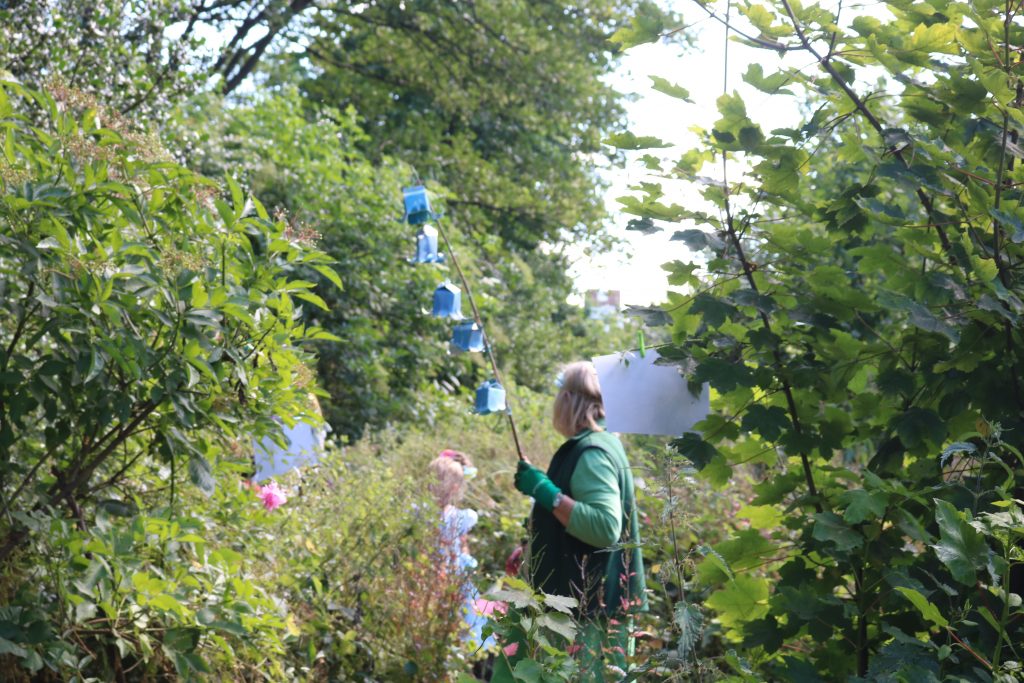
Our design process starts with the people who’ll use the space. We currently support a community nature reserve run on these same principles — a home for people and nature together, with habitats, nesting boxes and hibernacula built and maintained alongside our community.
Our ambition is to carry these principles into new builds: homes, community centres and growing spaces, designed with people and nature together from the outset, low-rise and considerate of what’s already there — daylight, rainfall, wind, the flora and fauna and the neighbours who were there before us. Every workshop is a chance to learn and teach — we support filmmaking in all its forms and want to record what we learn and share it, so knowledge grows with every project rather than staying with one pair of hands.
Ecologically Balanced
We know we need to make the most of what the land already gives us — supporting and improving biodiversity, capturing and storing rainwater, using earth and soil for natural temperature control — rather than fighting against it. Where climate creates a design problem, we look to natural solutions: trees and living structures for shade and shelter, natural insulation, earth-sheltered building, shutters and blinds from natural materials in place of mechanical cooling.
We follow a materials hierarchy in everything we make. First, we reuse biodegradable materials wherever we can — old woollen jumpers unpicked and respun, offcuts, natural fibres already in circulation. Where we need something new, we look for biodegradable options first, prioritising wool that would otherwise be thrown away, and choosing natural-fibre notions, such as cotton thread rather than polyester, metal zips instead of plastic ones and rubber elastic in place of synthetic options, when we can’t source these second-hand.
Only after that do we reuse materials that contain plastics or other fossil-fuel-derived fibres. Buying plastic items is always our last resort, and even then it’s a small part of what we do: most of our storage and equipment is natural or repurposed.
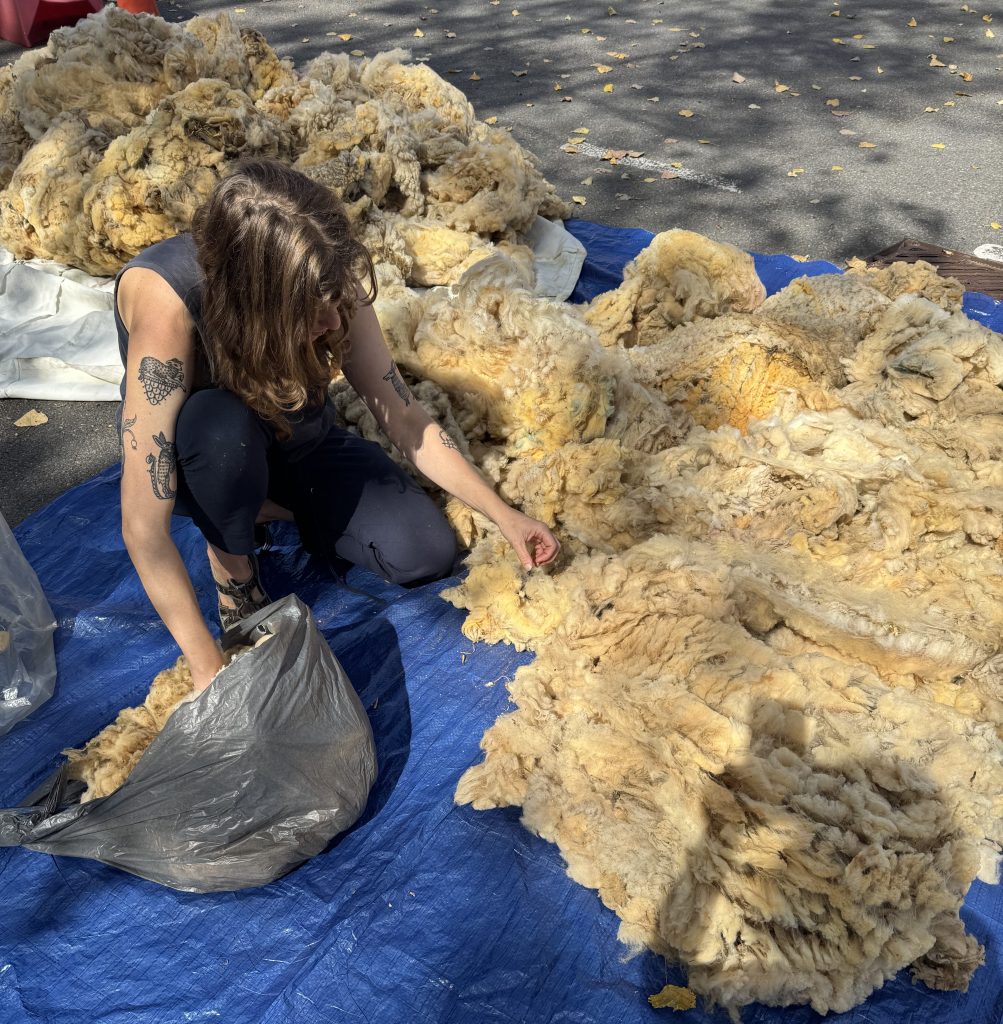
This extends to the raw materials in our textile and craft work. The wool we use is collected in person — we always aim to visit the farm ourselves — and source from people keeping small flocks to high welfare standards, often as surplus fleece that would otherwise go to waste. This has included wool from Munkagårdsgymnasiet, a school in Halland, Sweden, teaching animal care, agriculture, forestry and nature tourism.
Sustainable
Where these three pillars meet — climate-ready, community-led, and ecologically balanced — is where we try to build everything: bearable for the planet, equitable for the people who use it, and viable for the long term.