Camden Community Makers’ community craft space: raw fleece to finished piece, by hand, together.
What we do
Wool Lab is where our textile and craft work happens: spinning wheels, looms, sewing machines and felting stations, where people come to learn, make and share what they know. With our circular system offcuts and waste from each stage feed back into the next wherever possible.
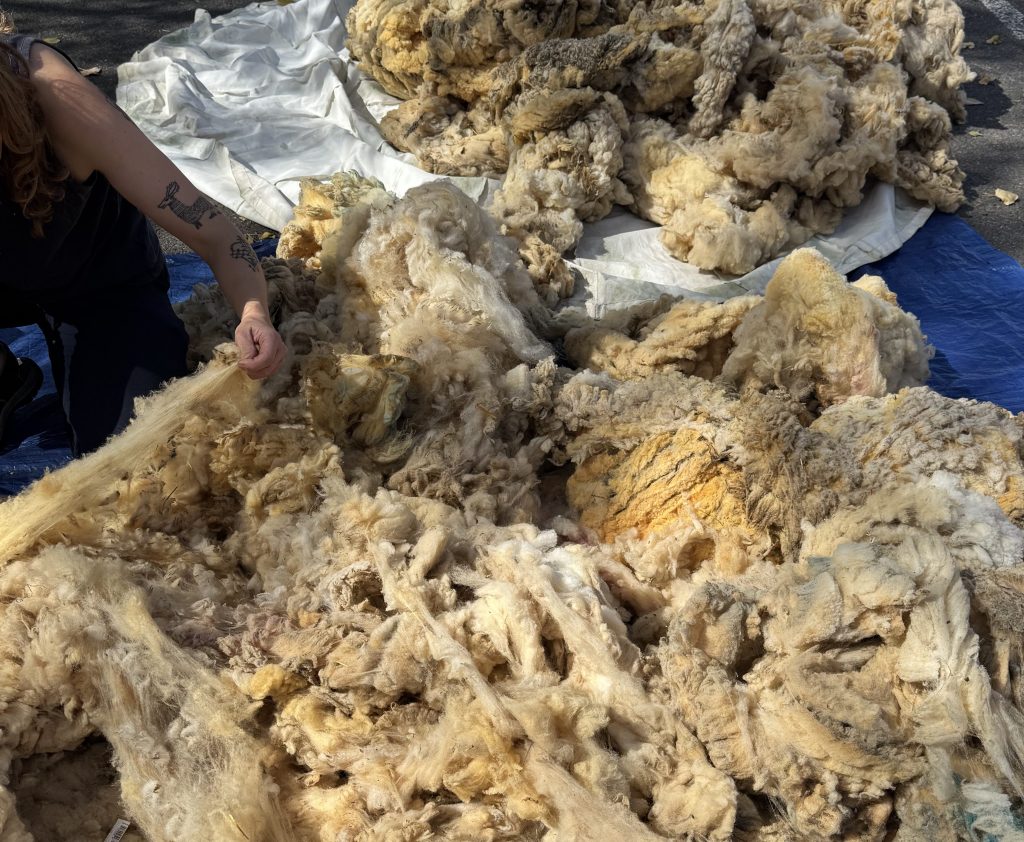
Raw Fleece
We source fleece directly from small farmers (we visit the farm ourselves) and process it for different purposes. Any parts of the fleece that are particularly dirty, we bag up for use on gardens and allotments. The rest is washed and scoured. Different sheep fleeces are categorised by fibre diameter (measured in microns) and crimp. Fine Fibre (under 27 microns) such as merino and Bluefaced Leicester can be used for close to the skin garments. Medium Fibre (27-36 microns) is more suitable for outerwear, and blankets, and woven home textiles. Course or Hairy Fibre (over 25 microns) is good for rugs, insulation and upholstery. Longwool or Lustre Fibre is good for art yarns, or decorative felting.
Workshops
Our workshops are supervised and open to anyone who registers. No experience is needed. They cover the stages of wool processing: sourcing and sorting fleece, washing, carding, spinning, knitting, weaving, felting, sewing and natural dyeing. We don’t just work with raw fleece, we also bring new life to old woolly jumpers and other textiles.
You can follow the whole journey from raw fleece to finished piece, or come to the one stage that interests you. Upcoming workshops are advertised on our events page.
Membership and the weekly drop-in
Joining Wool Lab is free and open to everyone, whatever your experience.
We hold a weekly drop-in session for members with experience who can work independently, and places are by appointment. If you are new to wool, start with a workshop and build from there.
Donations
Wool Lab runs on suggested donations so that no one is turned away for lack of money. Most of our workshops are led by volunteers. But we do have costs so do ask for donations that help offset the cost of materials and equipment, the cost of an outside tutor when we bring one in.
Donate materials or equipment
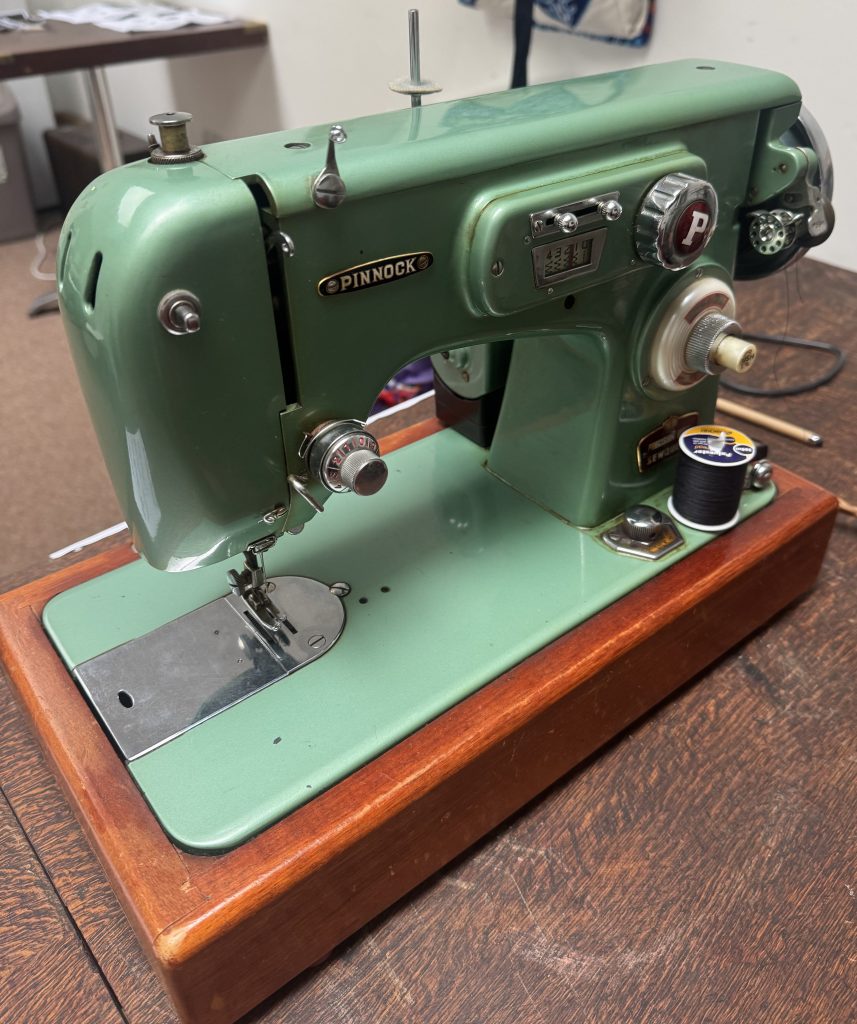
You can also donate wool and equipment. Several of our looms and a lot of our wool and a fabulous Pinnock sewing machine were donated to us by members of the local community. If you have materials or equipment that you no longer use, or that were passed down to you and you aren’t able to use, please get in touch to discuss. You don’t need to be a member to donate.
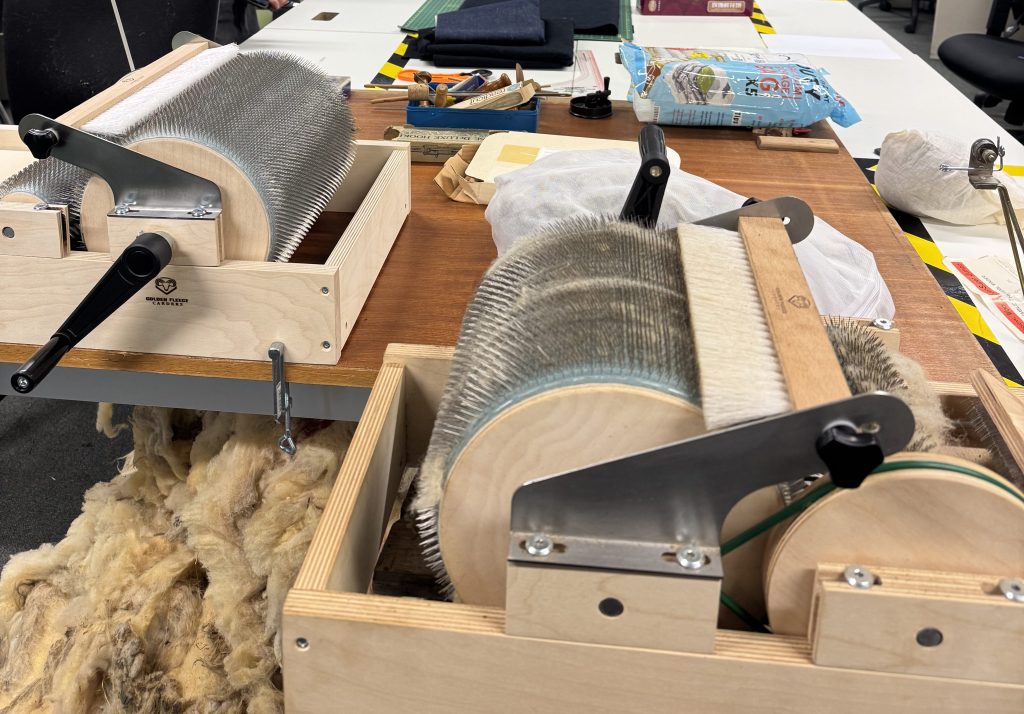
Equipment we accept spinning wheels, looms, carders, sewing machines and hand tools. Preferably working but if they only need minimal repairs we will do our best.
Materials We welcome donations of fleece and wool, yarn, old woollen jumpers we can felt or unpick and respin, natural-fibre fabric and offcuts, and accessories such as cotton thread and metal zips.
We can currently only accept natural, plastic-free materials, so please check the labels first. We are not able to take wool-mix, acrylic or other synthetic fibres.
Email us before bringing anything, with a short description and a photo if you can.
Why this matters
Heritage textile skills carry practical knowledge of how to live sustainably. Much of that knowledge is matrilineal, handed down through generations of women, and we think it belongs to everyone.
Wool Lab is open to applications now.